Contact lens basics
How to choose contact lenses that fit your eyes and lifestyle
Contact lenses are not one-size-fits-all. The right choice depends on your prescription, eye health, comfort needs, replacement schedule, and daily routine. At Fielmann Vision Care in Northern Illinois, our optometrists help patients compare contact lens options safely and choose lenses that support clear, comfortable vision.
Start with your eye exam and contact lens fitting
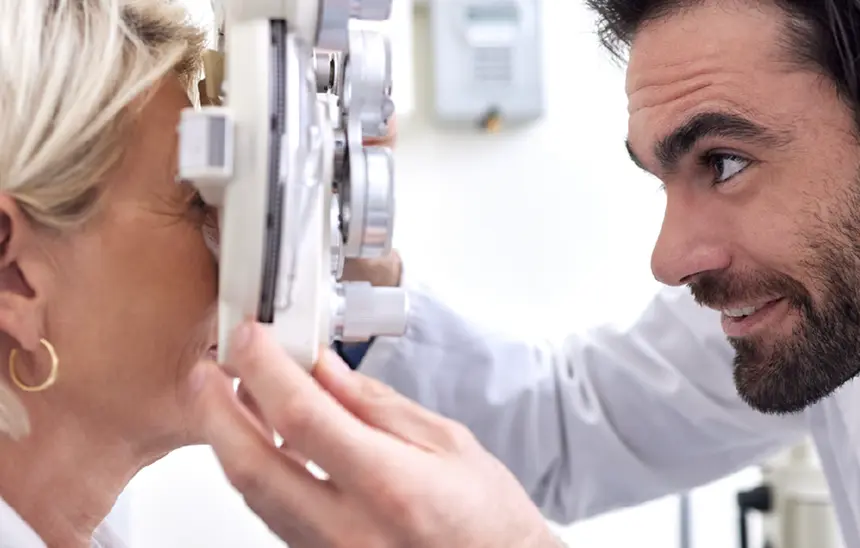
A contact lens prescription is different from a glasses prescription. During a contact lens fitting, your eye doctor evaluates your vision, measures your eyes, checks how the lenses sit and move, and confirms that the selected lenses are appropriate for your eye health. This step is especially important for new wearers, patients with dry eyes, astigmatism, or multifocal needs.
Think about how often you will wear contacts
Your wearing pattern should guide your lens choice. Daily wearers may want a balance of comfort, cost, and routine. Occasional wearers may prefer daily disposables for convenience. Patients who travel often, play sports, or switch between glasses and contacts should discuss those habits during the fitting.
Compare replacement schedules
Daily disposable contacts are worn once and thrown away at the end of the day. They require no cleaning routine and can be helpful for convenience, travel, allergies, or part-time wear. Bi-weekly and monthly contacts are reused for a set period and must be removed, cleaned, disinfected, and stored correctly each night. Extended-wear lenses are designed for overnight wear only when specifically prescribed and monitored by an eye care professional.
Match lenses to comfort and eye sensitivity
If your eyes feel dry, irritated, or allergy-prone, tell your optometrist before choosing lenses. Lens material, replacement schedule, solution type, and wearing time can all affect comfort. Your provider may recommend a different material, a daily disposable option, or a modified wearing schedule.
Review prescription needs
Contact lenses can correct nearsightedness, farsightedness, astigmatism, and presbyopia. Toric lenses are commonly used for astigmatism. Multifocal contacts can support near, intermediate, and distance vision for patients with presbyopia. Your optometrist will confirm which lens design works best for your eyes.
Consider cost and value
Cost varies by lens type, replacement schedule, and prescription complexity. Daily disposables may have a higher ongoing cost because a fresh pair is used each day, while planned replacement lenses may be more cost-effective for some full-time wearers. Regardless of the option you choose, our Lowest Price Guarantee helps ensure you receive the best value by guaranteeing the lowest price on all non-insurance purchases.
Ask about special features
Some contact lenses offer features such as UV blocking or color enhancement. UV-blocking contacts do not replace sunglasses because they do not cover the entire eye and surrounding skin. Ask your optometrist which features are appropriate for your prescription and lifestyle.
Find a Fielmann Vision Care practice in Northern Illinois to schedule an eye exam and contact lens fitting.
Frequently asked questions
Yes. Contact lenses require a contact lens prescription and fitting because the lenses sit directly on the eye.
Not always. Daily disposables are convenient and low maintenance, while monthly or bi-weekly lenses may be cost-effective for some wearers. Your eye doctor can help compare options.
Only if your optometrist specifically prescribes lenses approved for overnight wear and gives you instructions for safe use.
Related articles


Visit a nearby practice
We are conveniently located so you can explore our wide assortment of frames and experience personalized care from optometrists who take the time to understand your needs.
Book an eye exam